

We understand that disposal fees aren’t anyone’s favorite expense. However, safely collecting, storing, transporting, recycling, and disposing of materials comes with real and increasing costs. Landfill closures, along with rising transportation and energy costs, continue to impact what we pay to manage materials.
At least once a year, we compare our fees with other facilities in the region. For most items, our fees are lower than average. We charge only what is needed to cover the cost of removing materials from our site and paying two part-time staff members. Because much of our work is completed by dedicated volunteers, our operating costs are significantly lower than facilities staffed by full-time municipal employees.
Each town makes its own decision about how to fund its annual membership fee; some may use tax dollars, while others may use other available funding sources. Our member towns are also eligible for grants from the Massachusetts Department of Environmental Protection (MassDEP), much of which is earned because of the recycling and waste reduction services we provide. Last year, those grants totaled $22,200, and some towns use this funding to help offset their membership costs.
For FY27, the seven member towns will contribute a combined $45,000 in membership dues. This equates to about 10% of our operating expenses. Each town’s share is based on population and ranges from $2,707 to $15,270. Spread across our estimated 60,610 residents, this equals approximately 74 cents per resident per year.
Our funding, like much of our work, depends on collaboration and creativity. The largest share of our revenue comes from Pay-As-You-Throw drop-off fees, followed by membership dues from our seven towns. Additional revenue comes from our thrift store, eBay and consignment sales, SREC credits, payments for certain recyclable materials, donations, investment income, and grants from MassDEP and DCR.
Our mission goes beyond disposal. We work with nonprofits, schools, furniture banks, and other organizations beyond our seven member towns to find new homes for usable items. These partnerships reduce disposal costs, conserve resources, and help keep valuable materials in circulation rather than in the waste stream.
We are proud to provide this service to our communities and will continue working to keep it affordable and environmentally responsible. As we continue improving our data collection, we will also do a better job of sharing information about how much material is disposed of, recycled, and reused. We believe transparency helps demonstrate the value of the services we provide.

Building drop off
You can drop off 2 boxes but they MUST close and MUST be 30 lbs or less. We will reject those that don’t meet this criteria. We simply can’t manage the literal ton of material dropped off on each open day if it’s not packed correctly. Thank you for your understanding and help.

Winter Closing Policy
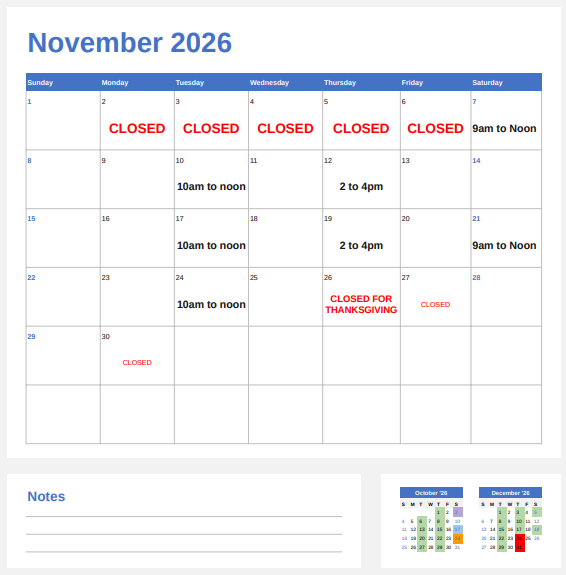
If we could accurately predict the weather, we’d be rich! Since we can’t, we check several weather sources when deciding whether to open or close. We do our best to remain open whenever it’s safe to do so, but conditions can change quickly so check here, our Facebook page or outgoing message at: 978-464-2854 for updates when conditions seem iffy.
We may close IF:
-
Snow or ice is expected during our open hours and could make working outside unsafe
-
The ‘feels like’ temperature is predicted to be in single digits during our open hours
-
More than an inch or so of snow has fallen in the previous 24 hours and we haven’t had a chance to clear the site adequately
Volunteers, please use your best judgment, too! Consider what you know you can comfortably tolerate, as well as the driving or walking conditions where you live. If you do come in during cold weather, please dress warmly and take breaks to warm up as needed. Your safety comes first, and we understand that conditions may be very different from one town to another.
We hope everyone stays safe, warm, and comfortable this winter!

You can help us to increase our open hours without becoming a volunteer.
When inquiries are made to why we aren’t open more hours/days, our quick answer is we’d need more volunteers. You might find it surprising to know that more than anything our open hours are limited by how well our visiting residents follow the rules and the extra work it takes us to remedy issues when they don’t.
Currently we have around 100 volunteers on our roster. Some are there only on specific open days or only special collection days. Others prefer to work only on nonpublic workdays to sort, shelve and test items for reuse. Some of our even less visible volunteers do tasks such as managing social media, volunteer scheduling or data analysis and reporting, repair or transportation of items or serve on our Board of Directors. A few volunteers are there up to 6 days per week because they handle a broad variety of things.
We are open a few hours a day, a few days per week. However, for every hour we are open at least another two or more are necessary for additional handling of what you dropped off. It’s possible this could be reduced if you could:
-Plan to minimize your time on site. Traffic will be less congested and slow if you can.
- Sort and prepare your items at home. Emptying and flattening cardboard boxes, sorting paper from containers etc or removing packing material and freezer packs from cardboard boxes and styrofoam at home means you’ll need less time with us.
- Pack so you only need to make one trip around the site. We have a map on our website. MAP. Pack so your first items being dropped off are the last items in your vehicle.
- Have your ID out, payment ready and pack the vehicle so we can easily assess items or even bring us a list if you did not pack your car. You will be asked at Check-in what is in your car/boxes, so please confirm with the packer what is there. See our website to check Drop Off Fees especially if you want to pay in cash. If planning to pay with cash – PLEASE bring small bills.
- Do not exit your vehicle if it’s blocking other traffic. Pull over and park.
- Consider not arriving in the first 30 minutes when the line tends to be the longest.
-Handle your items for reuse with care. You made the effort to bring it, don’t abandon it.
Items being left outside
- Please ask a volunteer if you do not know where an item goes and when they give you instructions, please follow them. Abandoned items often degrade before we can get them to the right location if they need to be inside. Other items are often too heavy for one person to move far after hours.
- If your item is incomplete or non-functional let us know so it can be handled properly.
- When possible, if you have an item you know you cannot move by yourself, bring extra muscle just in case we are short staffed that day.
Reuse/Resource Building – your LAST stop on the way out
- Pack your boxes so they can be easily handled. This means 30lbs or less, with securely taped bottoms and lids that close.
- If you are including sharp objects, please wrap them so we are not accidentally injured.
- If your item has dirt, food, unknown residue on it – wash it or trash it at home.
- Please stop dumping lots of small items into a box with other random things. If you group smaller items, such as parts to a game, pens/pencils or craft supplies in smaller boxes, bags, elastics etc we can get them shelved faster with less handling.
If you could follow these rather simple instructions, we might be able to do more with the same volunteers for longer hours or we might be able to cut back on the number of volunteers on a given day in order to add another day or set of hours to the weekly schedule.

Size matters
We’ve added some new visual aids near our Check In booth to help volunteers and residents understand how we price out their loads of household project debris. We do not have a scale to weigh loads as some sites do so instead we price the loads based on the volume of material ($60 per cubic yard) and potentially add on surcharge ($10 minimum per cubic yard) for heavier loads. Prices are at the discretion of the Check In Volunteer. When possible we’ll do our best to assess how much is metal (thus free) or another item with a lesser fee so please pack the load so we can accurately assess the fees.

Sectionals come in many configurations.
When they come to the Recycle Center each section is priced individually – not priced as one couch/sofa. If it has a reclining end, that is priced as a recliner. If there is a sleep sofa section, that is priced as a sleep sofa. Individual seats are priced as upholstered chairs. Chaise sections vary greatly in size and are priced accordingly. Prices are at the discretion of the Check In Volunteer.


